English Blog Articles – Sobel Network Shipping Co., Inc.

English

Healthcare Logistics Outlook 2026–2035: Global Market Set for Strong Double-Digit Growth

The global healthcare logistics industry is entering a decade of sustained expansion, driven by rising pharmaceutical demand, advanced therapies, expanding healthcare infrastructure, and increasingly complex regulatory requirements. Market Growth Trajectory The healthcare logistics market is projected to grow from approximately $131.7 billion in 2025 to $145.4 billion in 2026, reflecting a strong compound annual growth […]

Read More…

Supreme Court Clips Trump’s Wings: IEEPA Tariff Authority Struck Down in 6-3 Ruling

WASHINGTON — In a landmark decision that resets the balance of power between the White House and the Treasury, the Supreme Court ruled Friday that President Donald Trump overstepped his constitutional authority by using emergency powers to bypass Congress on trade policy. The 6-3 ruling specifically invalidates tariffs implemented under the International Emergency Economic Powers […]

Read More…

Asia Airfreight Market Softens Post-Lunar New Year While Annual Gains Persist

Airfreight rates originating from Asia have begun to moderate following the start of the seasonal holiday lull. Despite this weekly cooling, the market maintains a firm stance with notable year-over-year gains, signaling a more robust environment than the same period last year. Regional Market Shifts While the immediate post-holiday period typically sees a dip in […]

Read More…

Rail Freight Outlook Remains Cautious as Economic Signals Stay Mixed

Freight rail markets are entering 2026 with resilience — but also clear uncertainty. While overall economic growth has held steady, key indicators across manufacturing, trade, and consumer demand remain uneven. For railroads and supply chain stakeholders, the year ahead will likely be shaped by sector-specific trends rather than broad-based expansion. Carloads Up, Intermodal Under Pressure […]

Read More…

Rising Tariffs Spark Customs Bond Surge as Court Decision Could Reshape Billions in Trade Guarantees

Escalating tariffs over the past several years have significantly increased the financial obligations placed on U.S. importers — and in turn, fueled rapid growth in the customs bond market. As duties climbed across a wide range of goods, the value of import bonds required to guarantee payment of those duties rose sharply, in some cases […]

Read More…

Zero-Duty Textile Provisions Reshape Competitive Landscape in U.S.–South Asia Trade

Recent updates to reciprocal trade arrangements between the United States and key South Asian manufacturing hubs are creating new dynamics in the global textile and apparel supply chain. While adjusted tariff structures have provided relief to some exporters, selective zero-duty provisions tied to sourcing requirements are introducing new competitive pressures across the region. Under the […]

Read More…

U.S. Bangladesh Trade Agreement Establishes New Reciprocal Tariff Framework

A newly finalized reciprocal trade agreement between the United States and Bangladesh introduces updated tariff structures and expanded market access provisions designed to strengthen bilateral trade flows. Under the agreement, imports from Bangladesh into the United States will generally be subject to a 19% reciprocal tariff rate. However, select products identified under specific adjustment schedules […]

Read More…

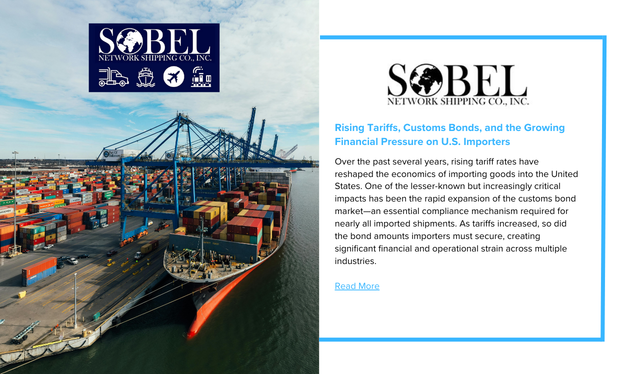
Rising Tariffs, Customs Bonds, and the Growing Financial Pressure on U.S. Importers

Over the past several years, rising tariff rates have reshaped the economics of importing goods into the United States. One of the lesser-known but increasingly critical impacts has been the rapid expansion of the customs bond market—an essential compliance mechanism required for nearly all imported shipments. As tariffs increased, so did the bond amounts importers […]

Read More…

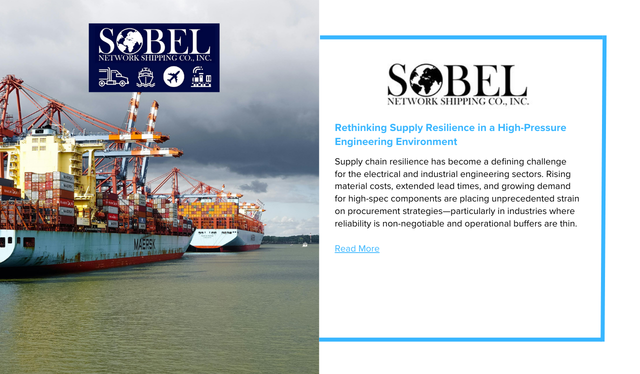
Rethinking Supply Resilience in a High-Pressure Engineering Environment

Supply chain resilience has become a defining challenge for the electrical and industrial engineering sectors. Rising material costs, extended lead times, and growing demand for high-spec components are placing unprecedented strain on procurement strategies—particularly in industries where reliability is non-negotiable and operational buffers are thin. Across global markets, the availability of critical electrical components has […]

Read More…