
Market Overview and Growth Projections
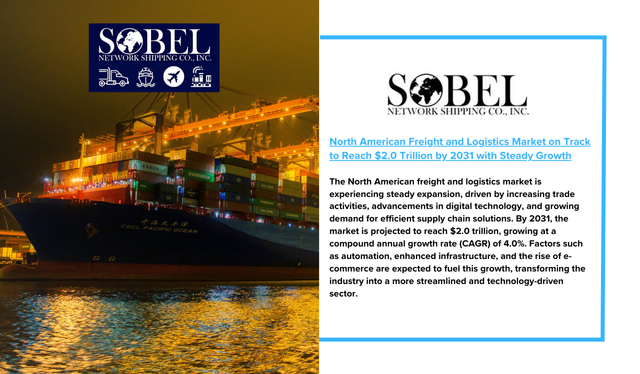
The North American freight and logistics market is experiencing steady expansion, driven by increasing trade activities, advancements in digital technology, and growing demand for efficient supply chain solutions. By 2031, the market is projected to reach $2.0 trillion, growing at a compound annual growth rate (CAGR) of 4.0%. Factors such as automation, enhanced infrastructure, and the rise of e-commerce are expected to fuel this growth, transforming the industry into a more streamlined and technology-driven sector.
A key driver of this expansion is the rapid growth of online retail. As digital shopping becomes the norm, logistics providers are investing in modernized transportation networks and advanced fulfillment strategies to meet rising consumer expectations. Additionally, cross-border trade remains a crucial component, facilitating the movement of goods across North America and reinforcing the region’s economic ties.
Key Drivers of Market Growth
- E-Commerce Surge
The exponential rise in e-commerce has reshaped the logistics industry, leading to increased demand for faster and more cost-effective shipping solutions. As online orders continue to grow, companies are integrating advanced technologies to optimize supply chain efficiency and improve last-mile delivery services. - Technological Advancements
Automation and digitalization are playing a pivotal role in streamlining freight and logistics operations. Innovations such as autonomous delivery vehicles, drone-based shipping, and AI-powered warehouse management systems are significantly reducing costs and enhancing service efficiency. - Infrastructure Investments
Ongoing investments in infrastructure development, including road networks, ports, and rail systems, are essential to supporting the industry’s growth. Upgrades to major transportation hubs and the modernization of logistics corridors ensure smoother freight movement and improved connectivity. - Supply Chain Resilience
Recent supply chain disruptions have highlighted the need for more flexible and adaptive logistics networks. Companies are adopting innovative strategies such as blockchain-based tracking, predictive analytics, and diversified supplier networks to mitigate risks and enhance operational continuity.
The Role of Automation in Logistics
Automation continues to revolutionize the logistics sector, significantly enhancing efficiency and reducing operational costs. The implementation of autonomous trucking technology and robotic warehouse systems is optimizing freight handling and reducing delivery times. The use of artificial intelligence in logistics planning is further improving route optimization and reducing fuel consumption.
Self-driving trucks and automated freight solutions are poised to address labor shortages while enhancing transportation efficiency. These advancements are reshaping traditional logistics operations and increasing productivity across the industry.
Sustainability Trends in Freight and Logistics
With growing environmental concerns, the logistics sector is shifting toward sustainable practices. Companies are adopting eco-friendly solutions such as electric delivery vehicles, renewable energy-powered warehouses, and carbon offset programs to minimize their environmental impact. The implementation of sustainable packaging and alternative fuel sources is also gaining momentum as organizations seek to align with global sustainability goals.
Challenges Facing the Industry
Despite positive growth projections, the industry faces several challenges that could impact its trajectory:
- Labor Shortages: The trucking industry continues to struggle with a shortage of qualified drivers, creating pressure on supply chains and increasing costs.
- Rising Fuel Costs: Fluctuations in fuel prices can significantly impact freight costs, influencing pricing strategies and logistics expenses.
- Supply Chain Disruptions: Geopolitical uncertainties, trade policies, and unforeseen events such as natural disasters can create instability in the logistics sector.
Regional Insights and Trade Dynamics
North America’s freight and logistics market is highly interconnected, with strong trade relationships driving growth. Investments in transportation networks and policy agreements are fostering greater efficiency in freight movement. Infrastructure development and streamlined regulations are further enhancing cross-border trade efficiency.
The Future of Freight and Logistics in North America
The future of the freight and logistics industry in North America is set to be defined by continued technological advancements and sustainability initiatives. The growing influence of artificial intelligence, blockchain technology, and data-driven logistics planning will further optimize efficiency and reduce operational costs. As e-commerce continues to expand, logistics providers will focus on enhancing speed, accuracy, and customer satisfaction.
With projected growth reaching $2.0 trillion by 2031, the industry remains a cornerstone of economic development. As companies innovate and adapt to changing market dynamics, the freight and logistics sector will continue to play a critical role in global trade and commerce.