
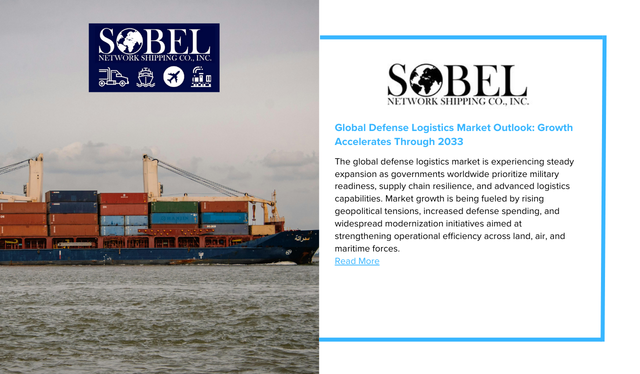
The global defense logistics market is experiencing steady expansion as governments worldwide prioritize military readiness, supply chain resilience, and advanced logistics capabilities. Market growth is being fueled by rising geopolitical tensions, increased defense spending, and widespread modernization initiatives aimed at strengthening operational efficiency across land, air, and maritime forces.
The defense logistics sector is expected to grow from approximately $174 billion in 2025 to more than $286 billion by 2033, reflecting sustained investment in transportation, warehousing, inventory management, maintenance, and procurement systems that support military operations during both peacetime and conflict scenarios.
Technology Transforming Military Supply Chains
Modern defense logistics operations are increasingly driven by digital transformation. Armed forces are integrating artificial intelligence, automation, real-time data platforms, and Internet of Things (IoT) technologies to enhance visibility, coordination, and decision-making across complex supply networks.
These technologies enable predictive maintenance, real-time tracking of assets, optimized inventory management, and faster deployment of personnel and equipment. Autonomous vehicles, drones, and smart warehousing solutions are also being adopted to support last-mile delivery in challenging environments and remote locations, improving operational speed and reliability.
Rising Defense Budgets and Global Modernization
Growing defense budgets—particularly in the United States, China, Germany, Saudi Arabia, and NATO-aligned countries—are accelerating investments in agile and technology-enabled logistics infrastructure. Military modernization programs increasingly emphasize flexible supply chains capable of supporting multi-domain operations, rapid force mobilization, and cross-border missions.
Governments are allocating resources toward digital logistics platforms, automated transport networks, and advanced fleet management systems to improve responsiveness and sustain long-term operational readiness.
Expanding Role of Public-Private Partnerships
Public-private collaboration has become a cornerstone of modern defense logistics strategy. Defense agencies are partnering with commercial logistics providers, technology firms, and transportation specialists to enhance scalability, reduce costs, and introduce innovative supply chain solutions.
These partnerships help bridge capability gaps, accelerate technology adoption, and improve efficiency while allowing military organizations to focus on core mission objectives. The growing involvement of private-sector logistics expertise is reshaping how defense supply chains are designed and managed globally.
Challenges and Risk Management
Despite strong growth prospects, defense logistics faces notable challenges. High operational costs, budget constraints, cybersecurity risks, and supply chain vulnerabilities remain key concerns. The increasing reliance on digital platforms exposes logistics networks to cyber threats, while geopolitical instability and regional dependencies heighten the risk of disruption.
To address these challenges, defense organizations are strengthening cybersecurity frameworks, diversifying supplier networks, and investing in secure, resilient infrastructure to protect mission-critical logistics operations.
Outlook Through 2033
As global security priorities evolve, defense logistics will continue to play a vital role in supporting national defense, international cooperation, peacekeeping missions, and humanitarian operations. The sector’s growth reflects a broader shift toward agile, data-driven, and resilient military supply chains, positioning logistics as a strategic enabler of modern defense operations well into the next decade.